


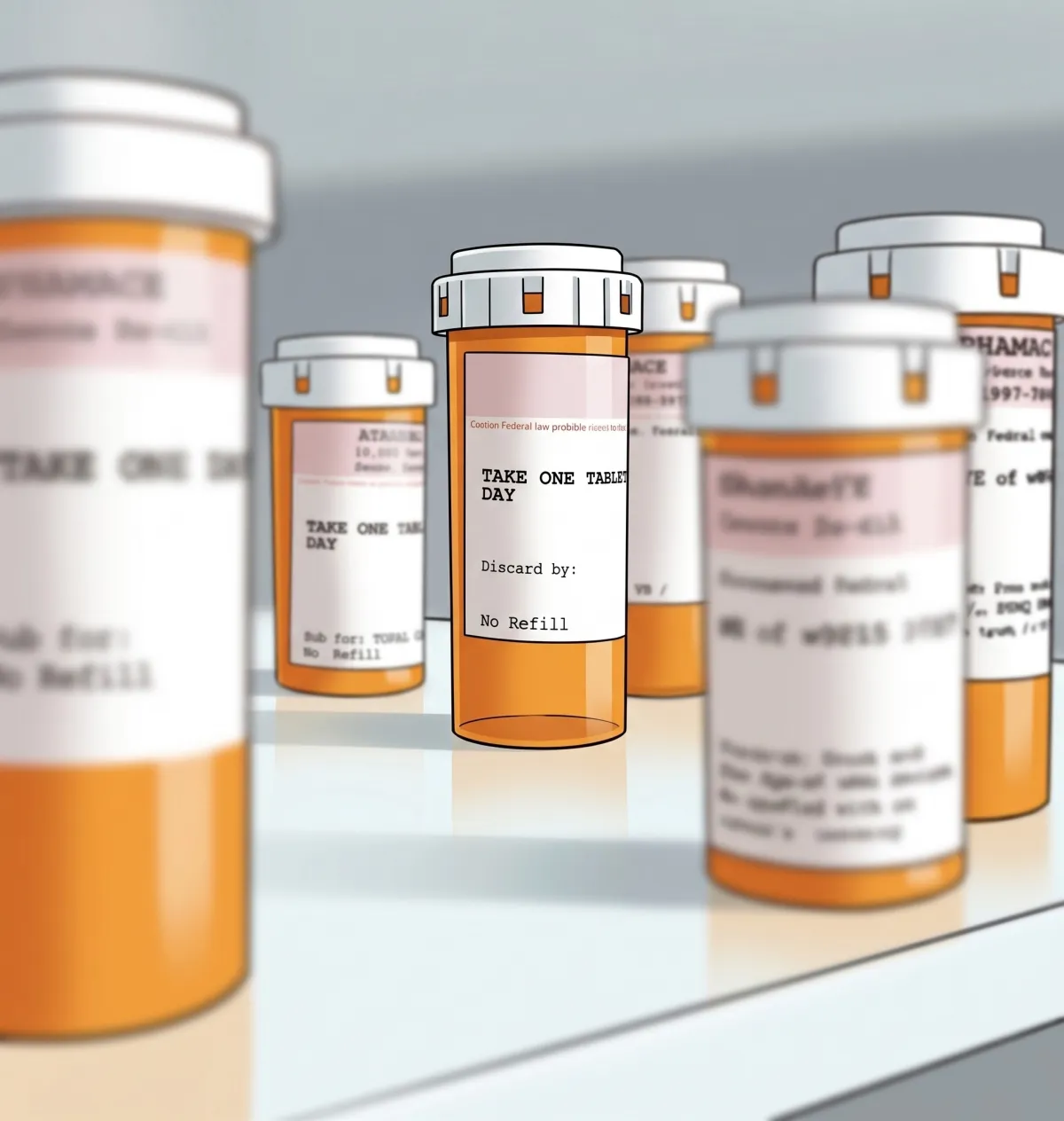
Take Control of Your Prescription Costs.
Navigating the pharmacy counter shouldn't be a source of stress. We help you compare Part D plans to find the coverage that perfectly aligns with your exact medications and preferred pharmacies.
Your Safety Net for Daily Medications
Original Medicare (Parts A and B) is excellent for hospital stays and doctor visits, but it does not cover the medications you pick up at your local pharmacy. To protect yourself from the high retail cost of prescriptions, you need a Medicare Part D plan.
Part D plans are offered by private insurance companies approved by Medicare. They act as standalone policies that you pair with Original Medicare (often alongside a Medicare Supplement/Medigap plan). Your Part D plan ensures that whether you take a generic daily vitamin or a high-tier specialty medication, your out-of-pocket costs remain manageable and capped.
Understanding the Pharmacy Puzzle
Every Part D plan is a little different. When we sit down to find the right plan for you, we look closely at these three factors:
The Formulary (Drug List)
Every plan has a "formulary," which is a specific list of prescription drugs the plan agrees to cover. If your medication isn't on a plan's formulary, you would have to pay the full retail price out-of-pocket.
Drug Tiers
Plans divide their formularies into tiers. Generally, Tier 1 and Tier 2 represent lower-cost generic drugs with the lowest copays. Tier 3, Tier 4, and Tier 5 contain preferred brand-name and specialty drugs, which usually come with higher copays or coinsurance.
Pharmacy Networks
Just like doctor networks, Part D plans have pharmacy networks. You will pay the lowest possible price for your medications when you use a "preferred" in-network pharmacy rather than a standard or out-of-network pharmacy.
How You Pay for Your Prescriptions
Your medication costs throughout the year are broken down into specific phases.
The Premium & Deductible: You pay a monthly premium to the insurance company just to have the plan. Before the plan starts paying for your medications, you may have to meet an annual deductible (though many plans offer $0 deductibles, especially for Tier 1 and Tier 2 drugs).
Initial Coverage Phase: Once your deductible is met, you and the plan share the cost of your drugs. You will pay a flat copay or a percentage (coinsurance) for each prescription.
The Out-of-Pocket Maximum: As of recent Medicare updates, your out-of-pocket spending for covered Part D drugs is capped annually (set at $2,000 and indexed for inflation). Once your out-of-pocket spending hits this cap, you will pay $0 for your covered Part D drugs for the rest of the calendar year.

Do You Need Part D if You Don't Take Medications?
Yes! If you go 63 days or more in a row without "creditable" prescription drug coverage after your Initial Enrollment Period, Medicare will impose a late enrollment penalty.
Medicare calculates this penalty by multiplying 1% of the "national base beneficiary premium" by the number of full, uncovered months you were eligible but did not enroll. This penalty is permanently added to your monthly Part D premium for the rest of your life. We often help healthy clients find a very low-premium Part D plan just to have a safety net in place and avoid this lifelong penalty.

Important Questions
Are all Part D plans the same?
No, they vary wildly. Two plans might have the exact same monthly premium, but they could place your specific medication on entirely different tiers, resulting in completely different copays. This is why we run a personalized drug comparison for you rather than just picking a plan based on the premium alone.
Can I get Part D if I have a Medicare Advantage plan?
Usually, no. Most Medicare Advantage (Part C) plans include built-in prescription drug coverage (called an MA-PD plan). If you enroll in a standalone Part D plan while you have a Medicare Advantage plan, you could be automatically disenrolled from your Advantage plan and returned to Original Medicare.
When can I change my Part D plan?
Your medications can change, and so do the insurance companies' formularies! You can shop for a new, better-fitting Part D plan every year during the Annual Enrollment Period (October 15th – December 7th). We review our clients' medications annually to ensure they are never overpaying.
What if I can't afford my medications?
If you have limited income and resources, you may qualify for the federal "Extra Help" program, which helps pay for Part D premiums, deductibles, and copayments. We can help you determine if you are eligible and point you toward the application.
Stop Guessing at the Pharmacy Counter.
Let us do the heavy lifting. We will securely collect your medication list, check it against the formularies of top-rated national carriers, and find the plan that saves you the most money.
Akroamatik
uh-kroh-uh-MAT-ik
(Greek):
1. Deep knowledge shared orally.
2. Things designed to be heard.
COMPANY
CONTACT INFO
Resources
USEFUL INFO
Akroamatik Financial is not connected with or endorsed by the U.S. government or the federal Medicare program. We do not offer every plan available in your area. Any information we provide is limited to those plans we do offer in your area. Please contact Medicare.gov, 1-800-MEDICARE (TTY users should call 1-877-486-2048), or your local State Health Insurance Program (SHIP) to get information on all of your options.